
The Dark Art of Long Exposure
Long exposure photography is a step up from day-to day snapshot photography. It needs a little more equipment, and you need to take a bit more control of your camera. However, it’s easy to learn and the results can be extremely satisfying.
This post will focus on long exposure work during the hours of darkness, the next post will cover daylight long exposure work.
Equipment
You need a camera with manual controls and a way to keep it perfectly still. Everything else is optional, although some items are more useful than others.
Camera
Some phones can do this, but a dedicated digital camera—especially one with interchangeable lenses—offers more flexibility. I use Nikon, but this applies to any modern system. It doesn’t have to be new or high-end; most digital interchangeable-lens cameras have manual exposure, which is the key feature.
Support
Long exposures require the camera to stay completely still, so use a solid tripod. It doesn’t need to be top-tier, just stable.
Other Items
The most useful other item is a remote release for your camera, especially if the maximum exposure that your camera can control is 60 seconds or less. This is less necessary on many modern mirrorless cameras which can control exposures of up to 15 minutes or more
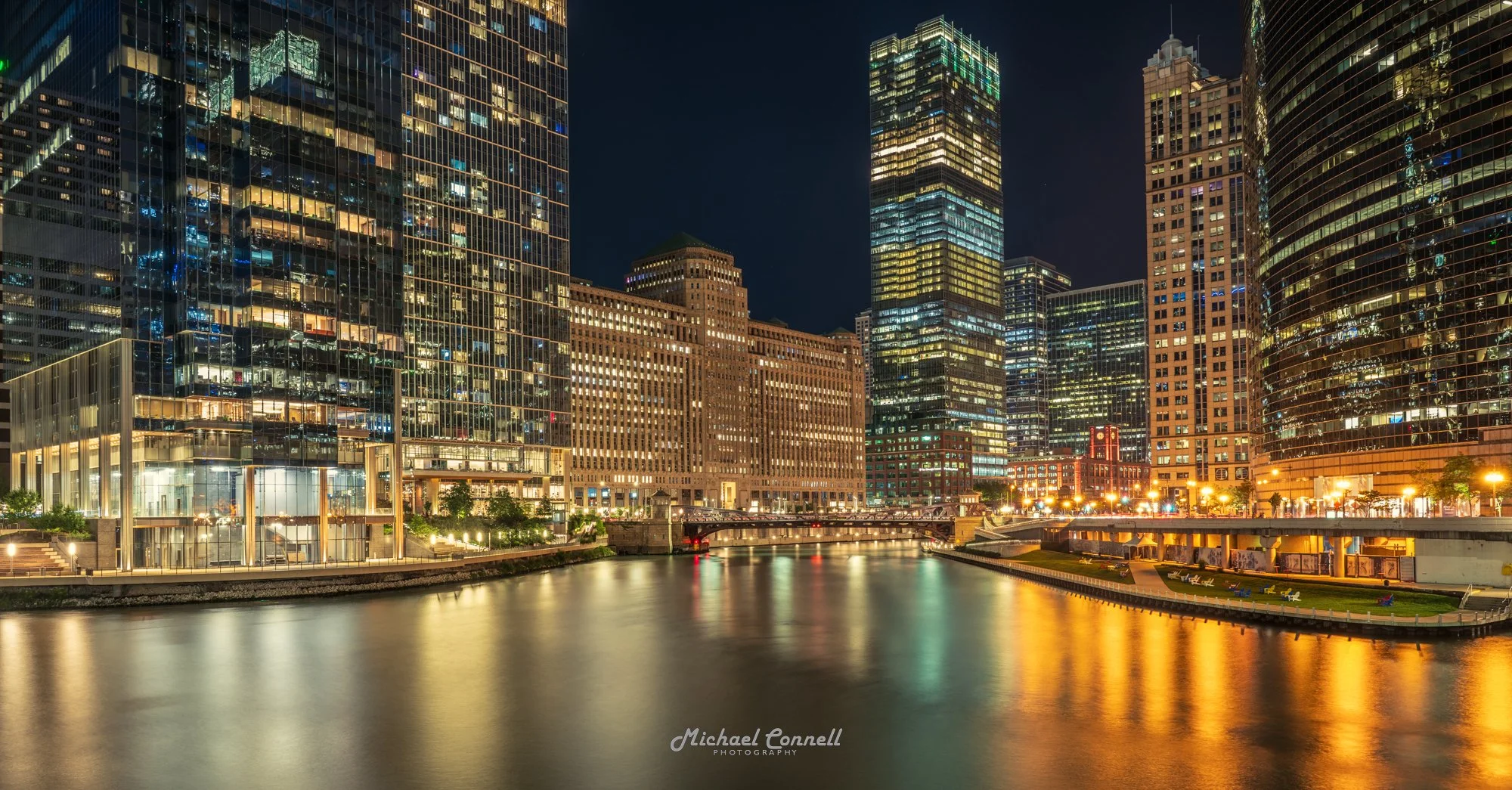
Merchandise Mart, Chicago.
Nikon Z8, 24-120mm lens at 24mm, ISO64, f/8, 60seconds, used a circular polarizing filter to control the reflections on the water, would have probably been a 30-second exposure without the filter.